Seyyid Musa Efendi Tomb was located in the courtyard of the Mufti Mosque, adjacent to the courtyard wall in the west direction. The fact that Evliya Çelebi does not mention this tomb suggests that it was built after the years 16651666, when the famous traveler saw the Mufti Mosque. The tomb, together with the Mufti Mosque, was used as a building of the Armenian Catholic Church in 1787. In the drawing of Dubois de Montpéreux of 1834, the tomb is depicted as a church together with the mosque. The tomb, which was used as a church for a while, was demolished at an unknown date. Today, only traces of the tomb are visible. In the courtyard of the mosque, the stones belonging to the tomb are stacked. According to the engravings and existing traces, the tomb is a 3,4 x 3,4 m building with a square plan like other examples in the Crimea, covered with a dome from the inside and an octagonal cone from the outside.
Kefe, Seyyid Mûsâ Efendi Türbesi
Feodosia, Seyyid Musa Efendi Tomb
| Country | Ukraine |
| City | Kefe |
| Built Year | 1665 |
| Converted | 1787 |
| Demolished | - |
| Architect/Patron | Unknown |
| Book Page | p.810 |
| Sources |
|
Photos
Gallery ready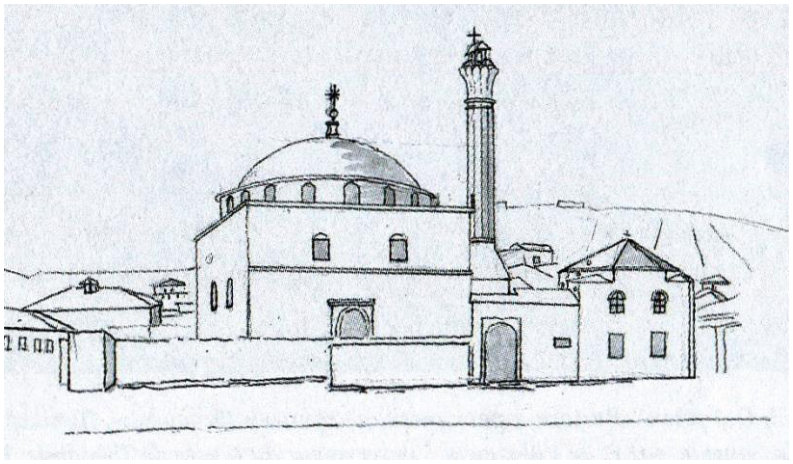
Feodosia, Seyyid Musa Efendi Tomb — R.18.18
Mehmet Emin Yılmaz (@mimaremin)
R.18.18
Kiliseye Çevrilen Türk Eserleri 2 / The Turkish Monuments Converted into Churches 2, p. 413
YTB Publications, 2023
Extracted from the public-access source work on the YTB Digital Culture Platform; used with source and author credit.
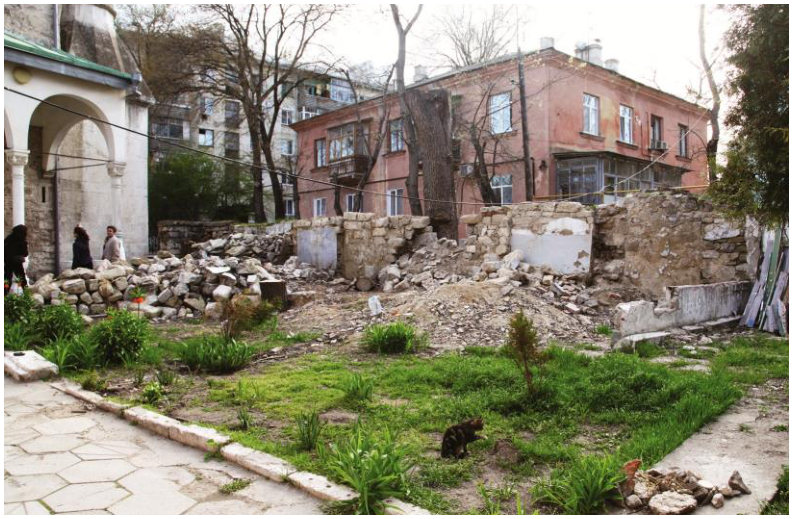
Feodosia, Seyyid Musa Efendi Tomb — R.18.19
Mehmet Emin Yılmaz (@mimaremin)
R.18.19
Kiliseye Çevrilen Türk Eserleri 2 / The Turkish Monuments Converted into Churches 2, p. 413
YTB Publications, 2023
Extracted from the public-access source work on the YTB Digital Culture Platform; used with source and author credit.
Figure references in the book
R.18.18R.18.19